Thursday, April 9, 2015

Intermat Paris 2015, from 20th to 25th April, 2015

Talleres Alquezar will exhibit at the Public Works and Construction Machinery Fair, Intermat 2015

The stand is number D-182 and it will be located in pavilion 7

Talleres Alquezar will presents its new aggregate and concrete batching plants, impact crushers, sand mills, vibrating screens, trommels, sand recovers and clarifiers for the coming year of 2015


Monday, February 18, 2013

Bauma 2012


Munich, from 15 to 21 April 2013


Talleres Alquezar will exhibit at the Public Works and Construction Machinery Fair, Bauma 2013

The stand is number 418 and it will be located in pavilion B2.

Talleres Alquezar will presents its new aggregate and concrete batching plants, impact crushers, sand mills, vibrating screens, trommels, sand recovers and clarifiers for the coming year of 2013.

The Munich Fair is the most important one of the sector in the work, with more than 3000 exhibitors and a surface area of 500,000 m2. 


Friday, February 10, 2012

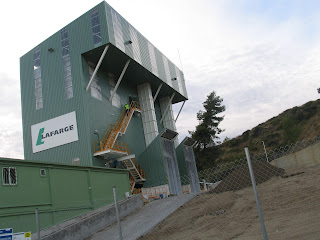
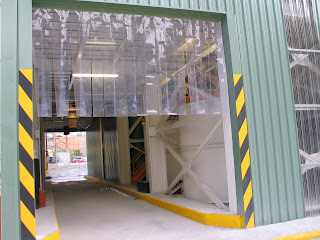
Special concrete plant for the Lafarge Group


Alquezar has finished the assembly of the special concrete plant for the Lafarge Group in the Barcelona town of El Papiol.

This is a Vertical Dosing Plant, model V-DH-240, with two concrete dosing lines, for a capacity of between 240 and 300 m³ per hour.

The peculiarity of this concrete plant is that it works with special aggregates such as anhydrite. It also incorporates a white cement dosing line.

Alquezar has constructed different plants for the Lafarge Group in Spain, France, Guadalupe Island and Reunion Island.

Lafarge concrete plant


Concrete output
Cement input
Aggregate input
Rotary vibrating feeder

Tuesday, January 31, 2012

Multi-cyclone plant in Panama

Alquezar has developed a new project for GUPC in the Panama Canal.
This is a multi-cyclone plant to eliminate fines in the wash water of a basalt quarry. The crushing processes of the quarry were producing excessive fines, causing problems in the water clarifiers for its recovery.

With this multi-cyclone system, a cut-off at about 0.040 mm is achieved, eliminating the 0.040 to 0.600 mm fraction of solid fines contained in wash water of the quarry, before it reaches the clarifiers. The plant has a water processing capacity of 3000 m³ per hour.

Alquezar uses its extensive experience in the quarry water treatment and washing processes to develop this new and specific project.


Wednesday, January 18, 2012

Crushing Plant for GUPC in the Panama Canal.


Alquezar has sold a fine sand crushing plant for the quarry of the extension work on the third set of sluice gates of the Panama Canal.

The installation is comprised of two centrifugal crushers (VSI) model VA-2500 with 500 kW power each one, and a high frequency classification sieve with biflow system.

The objective of the crushing plant is to produce 0-1.5 mm fine sand, from a feed of 1.5-19 mm basalt.

The VSI crushers are configured with closed rotor and impact anvils, to crush "rock on steel”


ALquezar's VSI Crusher

Tuesday, January 17, 2012

Concrete plant of Ribeiradio in Portugal for FCC


Alquezar has become consolidated as one of the great specialists at a global level in the manufacture of large concrete plants, for the construction of dams and large public works, after the sale of a new concrete plant, with stockpiling system and aggregate transport, cement and ashes stockpiling system, and pneumatic conveying system for cement and ashes.

The concrete plant, which is now in its assembly phase on-site, incorporates two BHS Sonthofen twin-shaft horizontal mixers, reaching a total production capacity of 300 m³/h. As normal with this type of plant, the aggregate is weighed by means of independent scales, thus minimising downtimes in aggregate dispensing.

FCC has trusted in the quality and professionalism of Alquezar in important projects such as the Dam of Castrovido in Burgos or the Vidin-Calafat Bridge between Bulgaria and Rumania.


Sunday, January 15, 2012

Concrete Plant of FOZ TUA in Portugal.


Alquezar wins the tender to manufacture the concrete plant for the hydroelectric dam of Foz Tua, in Portugal.
This is an important project comprised of three parts: Concrete Plant; Stockpiling and Transport of aggregates; Stockpiling of cement, Ashes and Pneumatic Conveying system.

The concrete plant is a dual plant, with BHS Sonthofen twin-shaft horizontal mixers, each one with 4.5 m³ capacity. These twin-shaft mixers admit aggregates of up to 150 mm. The total capacity of the plant is 250 m³ per hour.

The stockpiling of gravel and sand is carried out with metal silos whose capacity varies from 450 m³ to 750 m³, which are divided into different compartments thus permitting the storage of different sizes of aggregates in the same silo, guaranteeing full flexibility of the plant. The plant is completed with belt feeders, vibrating belts, conveyor belts, aggregate loading hoppers and temperature sensors in each one of the aggregate compartments. The transport and supply of the aggregates to the concrete plant is fully automatic.

The cement and the ashes are stored in five 600 m³ capacity silos and are transported to the concrete plant with two dense-phase pneumatic conveying systems.

The temperature control in this project is critical, so the entire plant is manufactured with sandwich panel installation, rock wool coating and thermal paint.

The construction of the Foz Tua dam project is carried out by a consortium of Portuguese construction companies, led by the company, Mota-Engil.


Friday, January 13, 2012

Crushing plant in Senegal


Alquezar will manufacture of quartzite crushing and classification plant in Senegal. This is a quarry for the production of concrete aggregates and asphalts, with 600 t/h capacity, incorporating a primary crushing stage, using a jaw crusher with 1400 x 1070 mm entry mouth. The secondary and tertiary crushing stages are carried out with three cone grinders, whilst the quaternary stage is comprised of a centrifugal grinder or vertical shaft impact crusher (VSI) model VA-2500.

The design of the plant, with its four crushing stages, guarantees good cubicity and the elimination of stones in the final product, providing top quality construction aggregates.

This is the second market covered by Talleres Alquezar in sub-Saharan Africa, after entering Angola a few years ago.


Wednesday, January 11, 2012

Washing Plant in the Panama Canal.


TALLERES ALQUEZAR has manufactured a washing plant for the GUPC basalt crushing quarry in the Panama Canal.

The plant is comprised of a wash screen, model TSL650, and a hydrocyclone sand recovery system. The washing trommel, model TSL650, is a machine that has been specifically designed for this project.  It has a supply capacity of 1000 tons per hour and is designed to admit a maximum feed size of 300 mm. For its part, the hydrocyclone sand recovery unit incorporates flat bottom cyclones to prevent excess fines in the final product.

The sale of this aggregate washing plant represents the extension of the commercial relationship between Alquezar and the contractor for the extension work on the third set of sluice gates of the Panama Canal: GUPC.


Wednesday, June 1, 2011

Concrete plant for the Panama Metro


Alquezar has been awarded the manufacture of a concrete plant, model DHA-80, for the construction work of Line One of Panama City, a project carried out by a consortium between the Brazilian construction company, Norberto Odebrecht and the Spanish company, FCC: Line One Consortium.

It is a ready mix concrete batching plant with 60 m³ per hour capacity, with planetary mixer, loading skip and additive dispensing scales. An additional plant has also been manufactured to stockpile cement with 200 m³ capacity silos.

With the sale of this concrete plant, Alquezar becomes consolidated as one of the main machinery manufacturers for quarries, aggregates and concrete plants of Panama.


Monday, February 21, 2011

Mortar Mixers


The Talleres Alquezar AMO mortar mixer is designed to achieve a homogeneous mix of the different materials in a short period of time. Its high reliability and low maintenance, the total product discharge guarantee, together with its high mixing efficiency, make this mixer the best choice.

The mixing shaft has meticulously designed mixing and scraping arms, which stir the material in rotation and in longitudinal direction, which, together with the additional side stirrer system, result in a mixture that has optimal homogeneous conditions regardless of the granulometry and characteristics of the materials.

The shaft bearings are mound on independent supports, which have no contact whatsoever with the mortar to be treated, thus guaranteeing their durability.

The materials are loaded through outlets placed at the top of the mixer, whilst the mixture is discharged by means of two longitudinal outlets placed along the mixer. A blowing system to fluidify the mortar, during the emptying process, has been installed to correctly discharge it from the mixer.


Technical dataAMO-1800AMO-2400AMO-3400
Gross volume2400 L.3100 L.4400 L.
Useful volume1700 L.2300 L.3300 L.
Max. capacity75-100 Tm/h.100-140 Tm/h150-200 Tm/h.
ight4300 Kg.6700 Kg.7500 Kg.
Mixing speed115 r.p.m.115 r.p.m.115 r.p.m.
Mixing power30 KW.55 KW.75 KW.
Agitator speed1500 r.p.m.1500 r.p.m.1500 r.p.m.
Agitator power3 x 4 KW.4 x 4 KW.4 x 4 KW.
Opening cylinder press80-130 Kg/cm280-130 Kg/cm80-130 Kg/cm2
stallation flow161 l/min.161 l/min.251 l/min.
Alquezar
Total length (A)419548285775
Tank length (B)200025303280
Total width (C)175019001900
Shaft height (D)105010501050
Total height (E)179017901790

Thursday, February 3, 2011

SMOPYC 2011

Zaragoza, from 5 to 9 April 2011


Talleres Alquezar will exhibit at the Public Works and Construction Machinery Fair, Smopyc 2011 in Zaragoza, Spain, from 5 to 9 April

The stand is number C-D / 1-10 and it will be located in pavilion 3.

Talleres Alquezar will presents its new aggregate and concrete batching plants, impact crushers, sand mills, vibrating screens, trommels, sand recovers and clarifiers for the coming year of 2011.

Tuesday, February 1, 2011

Impact crushers, BMTA series

The Alquezar impact grinding mills work with new kinematics, achieving special advantages in crushing and in their economy.

The feedstock enters laterally into the primary chamber, where the impact bars knock it against the specific wedges, where it is crushed. The sharp edges of the impact wedges penetrate the material, exerting a high pressure and bending stress, which enables us to crush larger-sized rocks than existing models on the market. The fragments of crushed material reach the second grinding stage, whilst the large sized materials recirculate again towards the primary chamber. The precrushed material passes to the third stage where it is submitted to the final grinding.


The typical design of the primary impact chamber creates the first crushing stage together with the impact elements. In this first stage, the impact elements have sharp edges, to be able to penetrate the rock better, due to the stress concentration placed on it. This system leads to considerable energy saving and guarantees less wear of the plates, so the production costs are also reduced. The second and third stage impact plates are mounted on hydraulically adjustable supports, so that we can adjust their distance from the rotor, depending on the material to be processed and on the material we want to obtain.

The impact grinding mill housing is covered with cast iron plates, with bolt or wedge fastenings accessible from outside the machine.

The rotor shaft is made of high quality forged steel, calculated to support the greatest strain. The transmission pulley can be placed on both sides of the shaft. The rotor is made of very robust welded elements, with wear-proof welding in the peripheral areas submitted to greater abrasion.

Maintenance is quick and easy thanks to the hydraulic housing opening system, which permits access to the impact bars, impact plates and wedges of the primary, secondary and tertiary phases.

Monday, January 31, 2011

Debris recycling plants


Alquezar design and manufacturers turnkey debris recycling installations, in agreement with its environmental protection commitment policy.

The actual debris is a very heterogeneous material, which can come from remains of excavations, remains of demolitions or remains of bricklaying.

The debris from bricklaying remains, is a very diverse material, difficult to classify, as it usually has remains of metal, plastic, brick, mortar, wood, paper, board, etc. To separate and classify this type of remains, Alquezar incorporates the latest technology, installing electromagnets to separate metals, air blowers to eliminate light plastics, rotary screens to separate sand and small-sized inert materials.  Finally it passes through some manual sorting booths, to classify glass, wood, board, etc.


The debris reaches the recycling plant and it is introduced into the installation by means of a reception hopper, protected with a grating to eliminate large-sized materials. This material is unloaded by belt conveyors and is taken by a belt system through different classification and sorting stages.

Depending on the type of material to be processed and the type of material to be obtained, crushing and classification stages for inert materials can be installed.

Wednesday, November 10, 2010

Áridos Vidal: Mobile concrete batching plant GM-DHA 120

Vidal Obras y Servicios S.A incorporates a new Alquezar concrete batching plant into its machinery pool.


The latest acquisition of Aridos Vidal, for its production centre in Graus (Huesca), is an Alquezar GM-DHA 130 mobile concrete batching plant.  The installation has one dosed concrete batching line and one double ready mix concrete line.

The production capacity is 100 m3/hour ready mix concrete and 120 m3/h dosed concrete, by means of 3 m3 cycles and double shaft horizontal mixer.

Vidal Obras y Servicios S.A. has several Alquezar concrete batching plants, an aggregate grading and wash plant and a water clarification installation.

Alquezar in the Panama Canal

Winner of the tender for two aggregate reclaiming plants for the work on the Third Set of Sluice Gates


Talleres Alquezar has won the tender for the design, manufacture and assembly of two aggregate reclaiming plants, for the construction work on the Third Set of Sluice Gates of the Panama Canal, carried out by the GUPC Consortium, and with the participation of the Spanish construction company, Sacyr.

The aggregate reclaiming plants, which will be located on the Atlantic and Pacific sides of the Canal, form a new system for loading, cooling, classifying and stockpiling aggregate that is carried out in real time according to the final concrete consumption demand.

This project amounts to almost 7 million dollars with 6 months' execution time.

New Alquezar's concrete batching plant for Maresa Group

The President of the Community of Madrid, Esperanza Aguirre, presided the launch of one of the most advanced concrete batching plants in Europe.


New Alquezar's concrete batching plant for Maresa Group 

The Maresa group tried out the Alquezar DH-150 dosed concrete batching plant for the first time on Monday 26 April.

This is a novel vertical concrete batching plant, for a maximum production of 220 m3/h, which incorporates new aesthetic and environmental solutions.

It is a complicated project involving the integration of a production centre in the Madrid neighbourhood of Hortaleza, so the installation satisfies the strictest sound-proofing and pollution regulations.

The concrete batching plant is integrated into an urban setting with office buildings, thanks to its spectacular avant-garde glazed cladding, which makes it look just like another any building in the area where it is located.

Technically, it is a vertical plant for the production of dosed concrete, with double loading line, with 220 m3/h maximum production.  The aggregate is stockpiled in 8 stockpiling silos at the top of the plant, with 300 m3 capacity, whilst the aggregate is loaded with 4 bucket elevators. All the mobile elements are designed and optimised to minimise noise and the production of dust.
The inauguration act was presided by the President of the Community of Madrid, Esperanza Aguirre, who highlighted the business work of the Maresa group and the importance of the project for the Community

Tuesday, October 5, 2010

Ready mix and dosed concrete plant for GEDHORSA

Alquezar finishes the start-up of a modular concrete unit for General de Hormigones


Ready mix and dosed concrete plant for GEDHORSA  

The start-up of a modular concrete plant, acquired by the group, General de Hormigones S.A. ended in March last.

This plant is manufactured entirely in modules, so that it can easily be dismantled later, transported and assembled at another work site, thus minimising the times and resources necessary to carry out these operations.

Alquezar has firmly committed to the modular concept for concrete batching installations. The different parts of the installation are designed and manufactured in self-supporting structure modules. These are submitted to pre-assembly in factory, in order to verify the compatibility of all the parts and avoid future problems in the final assembly. This modular design means that the elements can be transported with standardised means (platforms, containers and flat-racks) and that the unit can finally be quickly assembled.
The General de Hormigones S.A. plant is a horizontal station, with enclosure for structure, hoppers and conveyor belts. It has one ready mix concrete production line and two dosed concrete lines, with maximum productions of 120 m3/h dosed concrete and 100 m3/h ready mix concrete.

The installation incorporates a double shaft horizontal mixer, with 3 m3 cycle capacity. The aggregates are stockpiled in 4 25-m3 hoppers, and the cement in 2 100-ton silos.